
Why I Trust — and Test — My Browser Wallet: A Practical Look at Rabby and DeFi Security
Whoa! Okay, quick confession: I get nervous handing a private key to anything that looks too slick. Seriously? Yeah. My gut tightened the first time I used a browser extension wallet and saw 12 words on the screen like a sacred incantation. At the same time, the convenience is addicting. Browser wallets let you jump into DeFi in seconds, but that ease brings a vector for mistakes, social engineering, and outright theft. Something felt off about many tutorials that treated security like a one-time setup. My instinct said: re-check, re-test, fail safely.
At first I thought all browser wallets were pretty similar. Then I started using one for a week straight and noticed tiny differences that mattered. Initially I thought the permissions UI was just cosmetic, but then realized permission granularity can stop a lot of common mistakes—like letting a site drain tokens it shouldn’t touch. Actually, wait—let me rephrase that: permissions aren’t a silver bullet, but they are a useful brake when paired with good user habits. On one hand convenience matters. On the other, the stakes are real: millions of dollars and a lot of sleepless nights for people I know who didn’t double-check an approval. Hmm…
Here’s the thing. A secure DeFi workflow combines tooling, rituals, and skepticism. You need tools that nudge you toward good choices. You also need the patience to confirm. And a bit of paranoia helps—just enough to keep you reading transaction details instead of blindly hitting “confirm.” I’m biased, but that attitude has saved me crypto more than once. This piece is a mix of personal notes, tactical advice, and a close look at a browser extension wallet many users are asking about—rabby—so you can decide whether its design matches your threat model.
Small details that save money (and peace of mind)
Short story: approvals are dangerous when you don’t read them. Long story: token approvals allow a contract to move tokens on your behalf. If you give infinite approval, a malicious contract can drain your entire balance. That’s bad. Very very bad. The safe habit is to use per-use approvals or spend-limit options when available. When I audit my own flow, I check three things before any confirm: the destination contract address, the method name (swap, addLiquidity, etc.), and the allowance amount. If any of those look weird I stop. That’s a ritual, not a religion.
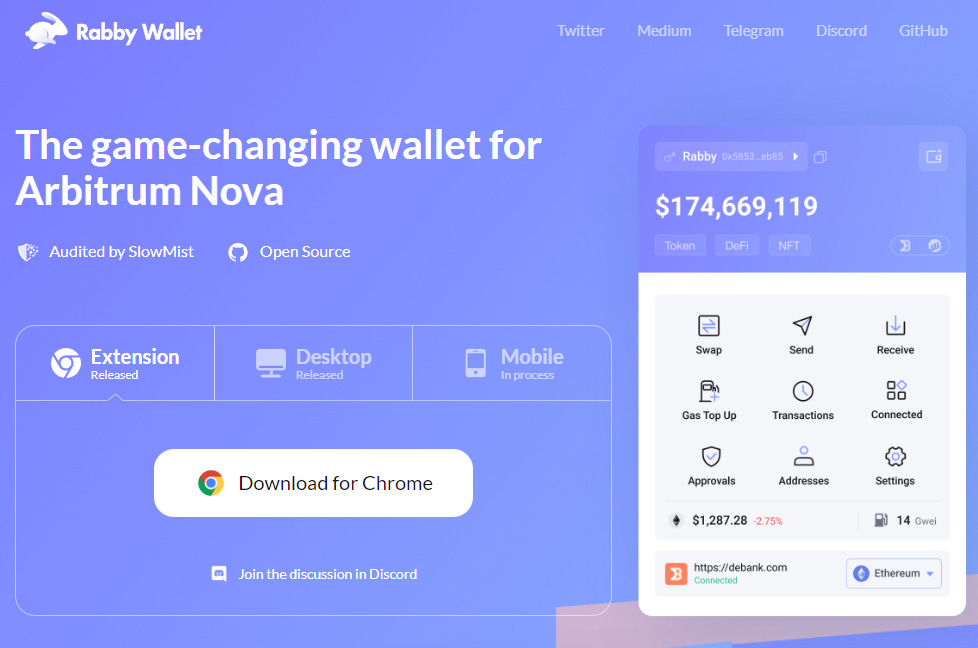
Rabby’s UI puts allowance controls in clearer places compared to some older wallets I’ve used. On a practical level that means fewer “oh s—” moments after connecting to a DeFi site. I’m not saying it’s perfect. No wallet is. But the interface nudges you to revoke or limit allowances more easily, which reduces the blast radius of a compromised DApp. My instinct said this would be a small comfort; then it saved me from a careless approval during a test. Wow!
Another detail: transaction simulation. Tools that show the expected result of a transaction before you sign it are invaluable. They catch token slippage mistakes and obvious front-end manipulations. Initially simulations felt like bells and whistles to me. Though actually, seeing a dry run of token balances after a swap makes you pause. You start asking better questions. On a recent testnet run I would have lost a small but real amount—if I hadn’t paused to check that simulation. Little wins add up.
How I stress-test a browser wallet
Okay, so check this out—my stress-test is annoyingly simple and usually boring. I set up three accounts: daily, savings, and ghost. The daily account holds small balances for frequent interactions. The savings account stores most assets and signs only high-trust operations. The ghost account is empty until I need to test something sketchy. This separation reduces cognitive load and isolates risk. It sounds overdone, but you do not want all your eggs in one extension.
Next, I test permissions. I connect to a new DApp on the ghost account, give minimal permissions, and then try to break things. Can the site request arbitrary signatures? Can it trick the UI into showing the wrong token label? Can it request an approval larger than it needs? These are the practical questions. If the wallet nudges me to confirm exact amounts and clearly labels the contract, that’s a plus. If the wallet buries contract data behind an obscure menu, that’s a minus. My testing is methodical, almost annoyingly slow. But then again, I value sleep.
On a technical note, I also check extension permissions from the browser’s perspective. Does the extension request activeTab, webRequest, or other broad scopes? Some permissions are fine and necessary. Others are surprising. If I can’t explain why an extension needs a permission, I dig deeper. Sometimes it’s just fine. Sometimes it raises red flags. On one occasion a wallet update claimed a permissions change and I paused my usage until I verified the changelog. That pause saved a headache.
Social engineering: the human side of security
Humans are the weakest link. Period. An attacker doesn’t need to exploit a cryptographic bug if they can get you to type your seed into a fake site. So here’s where user education matters. I tell friends to never enter seed phrases into a website—ever. Write them down on paper. Store them offline. Consider a hardware wallet for significant holdings. I’m biased, but hardware + browser extension gives a good balance: immediate UX with an offline signer when you need higher assurance.
Rabby makes some educated choices around UX that reduce obvious traps. For example, it surfaces the origin of signing requests more clearly than some older UIs, and it keeps account naming local so you don’t get confused by similarly-named accounts across devices. That clarity reduces phishing risk. Still, I’ve seen clever attackers mimic legitimate UIs. So a ritual of cross-post verification—checking the contract on a block explorer and confirming the DApp’s canonical domain—adds a layer of safety. It takes time, but it’s worth the time when you’re dealing with real funds.
Also: backups. I can’t stress this enough. I’ve seen people lose money because they treated a seed like an ATM receipt. A good backup strategy is multi-pronged: paper backups in fireproof, split-seed schemes if you’re comfortable, encrypted digital backups you control, and redundancy in different physical locations. Not glamorous. Very practical. And yes, it’s boring—but it’s life insurance for your crypto.
Where wallets still need work
On the technical side, privacy leaks are a thing. Browser extensions inherently reveal connection patterns to websites, and some extensions share telemetry by default. I’m not 100% sure about every telemetry call I see in some extensions’ manifests. I’m cautious. Rabby’s stance on telemetry is relatively transparent compared with some alternatives, which I appreciate, but transparency isn’t the same as minimal data collection. Keep an eye on settings after installation.
Another issue is recovery UX. Recovery seeds are hard to manage, and people will inevitably seek shortcuts like screenshots or cloud notes. Wallets could do more to nudge users away from those patterns, for instance by limiting copy-paste of seed phrases and providing better educational UX during setup. Onboarding that forces a short hands-on backup exercise, instead of a single “write this down” step, helps retention and reduces risky shortcuts.
Finally, multisig and account abstraction are improving security models, but they aren’t mainstream yet. These are complex to set up and often require more technical knowledge. Wallets that make multisig approachable will be a game-changer for average users. Rabby has been adding features that support more advanced flows, which is promising, though adoption will take time.
A quick guide: safe DeFi session using a browser wallet
1) Use a dedicated extension account with limited balance for casual trading. 2) Inspect approval screens and prefer spend limits. 3) Run a tx simulation if available. 4) Verify contract addresses on a block explorer. 5) Revoke unused approvals routinely. 6) Keep high-value assets in hardware or multisig. These steps are simple, but people skip them because they want speed. Don’t be that person.
There are tools that automate step 5 and monitor allowances. Use them. They flag stale approvals and suspicious increases. I run a weekly sweep to revoke unnecessary allowances. It takes 10–15 minutes. It’s tedious, but it’s preventative maintenance. Think of it as changing your oil.
One more human note: when things go wrong, community channels can help but also mislead. Verify any recovery advice twice. If someone on a forum tells you to paste your seed into a recovery tool, that is a red flag—always a red flag. I’m not trying to be alarmist; I’m just realistic. Trust but verify, and then verify again.
Check this out—if you want to try a browser wallet with clearer allowance controls and tighter UX nudges, consider rabby. I linked it because I use it and because it tends to promote safer defaults than many alternatives. Not an endorsement for all situations, just a practical recommendation based on repeated use. Your mileage may vary.
Common questions about browser wallets and safety
How do I limit the damage if a DApp asks for approval?
Always choose the smallest allowance possible. If the site only allows infinite approvals, consider using an intermediate token bridging service or a temporary wallet. Revoke approvals after use. And test on a small amount first—learn by doing in low risk environments.
Is a browser wallet enough for long-term storage?
No. Browser wallets are ideal for active DeFi interactions but are not the best option for long-term storage of large holdings. For long-term storage use hardware wallets or multisig setups and keep the browser wallet for active, lower-value interactions.
What should I do if I suspect a transaction is malicious?
Stop immediately. Do not confirm. Revoke approvals, disconnect the DApp, and transfer funds from compromised accounts to a safe temporary wallet if possible. Check community channels and reputable security forums, but only after you’ve secured assets. If the exploit is live, act fast and minimize exposure.
